Table of contents
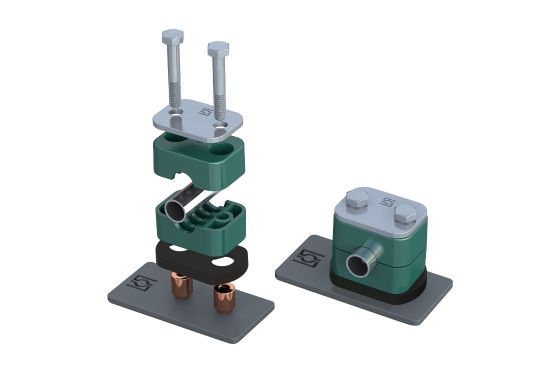
The introduction of the stud welding system at Bauma 2016
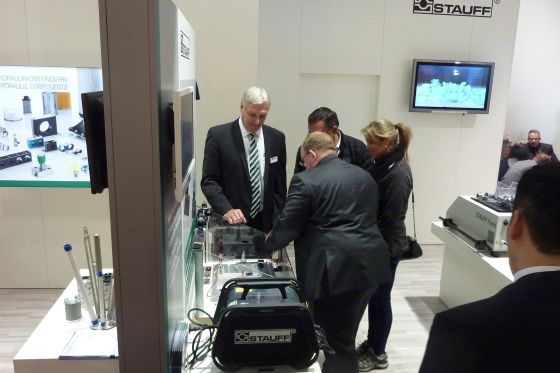
When STAUFF presented the stud welding system in action for the first time at the Bauma trade fair in 2016, a new fastening method was introduced to the existing portfolio. The aim was to create a solution that makes the assembly of pipe, hose and cable clamps more efficient while also meeting high precision and load-bearing capacity requirements. Since its market launch, the process has established itself as a permanent fixture in industrial assembly.
Why stud welding is a useful addition to traditional fastening methods
In many industries - including general mechanical engineering, mobile hydraulics and plant engineering - fixed, reliable fastening points are essential. Typical methods such as welding base plates, screwing or bonding each have specific strengths, but reach their limits in certain assembly situations. Stud welding closes this gap by enabling a firm, punctual and highly reproducible connection. Users primarily utilise the process where space is tight, sheet metal structures are thin or high processing speeds are required.
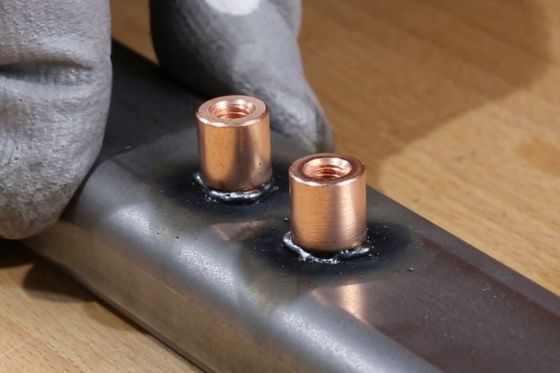
The basic principle of stud welding with the SWG system
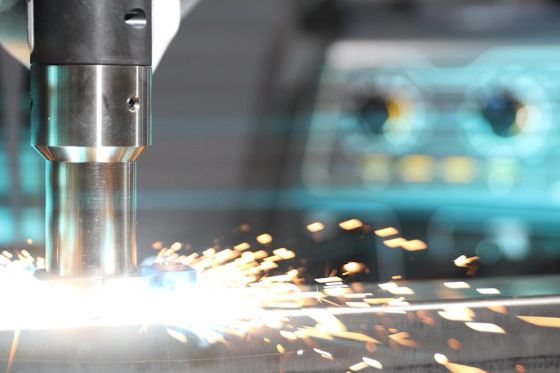
In stud welding, welding studs with internal threads are permanently attached to the substructure. These studs replace conventional weld-on plates for clamps in the standard and double series in accordance with DIN 3015 Part 1 and Part 3. The process utilises a stud welding device with which the studs are completely fused to the surface at specific points and in a very short time.
A spacer adapter ensures that two studs are positioned exactly at the required distance from each other. A plastic spacer plate is then attached to create the required distance between the clamp body and the substructure. The actual installation of the clamp is then carried out as usual.
Go directly to category
Further information on stud welding and much more can be found directly in our online shop
What advantages users gain from stud welding
Stud welding has established itself primarily due to its practical advantages. In daily use, users benefit from
Savings potential for larger processing quantities thanks to short process times and low preparation costs
Greater flexibility in mounting positions, especially for overhead or wall mounting
Reduced reworking, as the spot welds are executed very cleanly
Minimal material distortion due to the slight influence of heat - crucial for thin-walled constructions
Reduced risk of corrosion due to the full-surface connection between the bolt and the substrate
These factors mean that the process is economically attractive for both series production and project-orientated assembly.
How stud welding has developed at STAUFF over ten years
Since its first introduction, stud welding has established itself as the standard for many OEMs and hydraulic service providers. The process offers clear advantages in terms of reproducibility and process reliability, particularly in series production. At the same time, it is increasingly being used in smaller project environments where flexible assembly conditions are required.
The system is no longer limited to clamps in accordance with DIN 3015, but can also be combined with customised fastening solutions - for example with components for guiding cable ties or tension belts. As a result, it fits seamlessly into the overall modular system of various fastening methods, which also includes adhesive and screw solutions as well as different rail systems.
Typical application scenarios from practice
In practice, the benefits are particularly evident in areas of application where:
Sheet thicknesses vary or are limited
assembly stations are difficult to reach
installation space is tight and classic base plates would be a hindrance
many fixing points have to be set in a short time
Users report particular advantages for retrofitting or repairs, as fixing points for STAUFF clamps can be added quickly and reliably.
What support STAUFF offers users today
STAUFF offers various forms of support so that companies can use the process easily:
Demonstrations directly at the customer's premises
Loan units for short-term test installations, depending on region and availability
Checking existing welding equipment and accessories for compatibility
Recommendations for suitable welding equipment or provision of appropriate systems
This support helps users to evaluate the process safely and integrate it efficiently into existing processes.
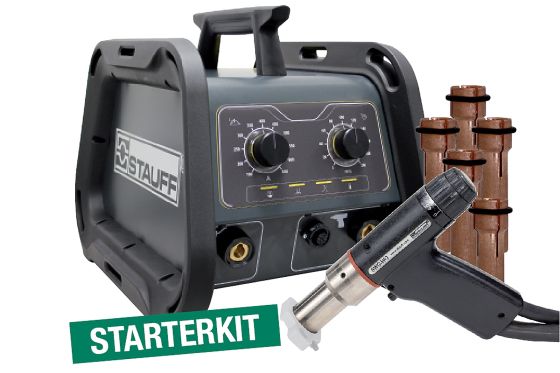
The role of stud welding in future assembly processes
Stud welding will continue to gain in importance wherever compact designs, low material thicknesses or high cycle times play a role. Due to the ongoing diversification of fastening elements, the process is becoming increasingly flexible and complements other methods without replacing them.
FAQs
How does stud welding work in industrial assembly?
In stud welding, threaded studs are spot-welded onto the surface with high energy. This creates a strong connection that does not require pre-drilling or additional components.
When is it worth using welding studs with an internal thread?
It is particularly worthwhile using them when a large number of fastening points need to be set in a short space of time or when thin sheet metal structures need to be processed without major material distortion.
What are the advantages of stud welding compared to welding base plates?
It offers a more compact assembly, less heat distortion and a clean surface, as no larger components need to be welded on.
Can stud welding also be used for thin-walled materials?
Yes, as the process only requires a very short welding time and the heat is applied very selectively, it is particularly suitable for thin-walled sheet metal.
For which applications is the SWG system particularly suitable?
It is suitable for fastening pipe, hose and cable clamps as well as for customised brackets, for example for cable ties or tension belts.
How can I check whether existing stud welding units are compatible?
A compatibility check can be carried out using technical specifications. STAUFF supports users in checking devices and accessories and recommending suitable hardware.
Is stud welding also economical in series production?
Yes, especially in series production, the process benefits from fast cycle times, minimal rework and stable processes.

Newsletter subscription
Subscribe now and don't miss any new articles!